"Pressure washing" gets used as a catch-all term for exterior cleaning, but using high pressure on the wrong surface can actually cause real damage — cracked siding, stripped paint, even water forced behind panels. Knowing which method your property needs matters more than most homeowners realize.
The Core Difference
Pressure washing uses high-pressure water alone to blast away dirt and grime. Soft washing uses low pressure combined with a cleaning solution that actually kills algae, mold, and mildew at the root — not just removes what's visible on the surface.
When to Use Pressure Washing
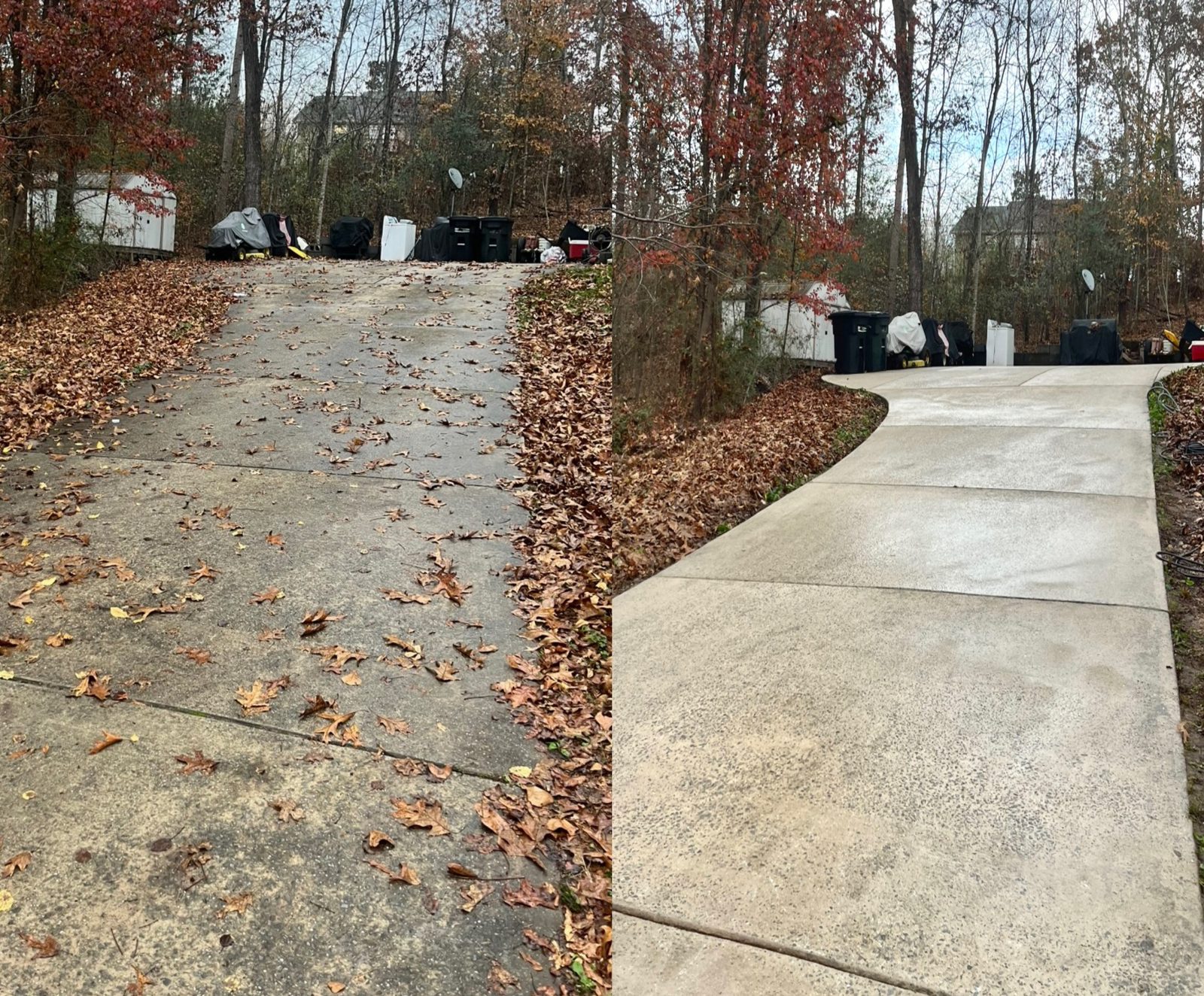
- Concrete driveways & walkways — durable enough to handle high pressure, and it's often the fastest way to lift oil stains and ground-in dirt
- Brick patios & hardscaping — generally safe for higher pressure, though mortar joints need some care
- Fences and decks (with the right pressure setting for the material)
When to Use Soft Washing
- Vinyl & wood siding — high pressure can crack panels or force water behind them
- Roofing — pressure washing a roof can strip granules and void manufacturer warranties; soft washing is the industry-standard method
- Stucco & EIFS — these surfaces are especially vulnerable to water intrusion under pressure
- Painted surfaces — high pressure can strip paint that soft washing leaves untouched
| Surface | Recommended Method |
|---|---|
| Concrete driveway | Pressure washing |
| Vinyl siding | Soft washing |
| Roof shingles | Soft washing |
| Brick patio | Pressure washing |
| Wood deck | Pressure washing (lower PSI) |
| Stucco/EIFS | Soft washing |
Why This Matters
The wrong method doesn't just risk looking worse — it can cause damage that costs far more to repair than the cleaning itself. A company that offers only one method for every surface is a red flag; the right approach changes depending on what you're cleaning.
Not sure which your property needs? We assess every surface before we start and use the right method for each one — never a one-size-fits-all approach.
Get a Free Estimate Call (423) 255-5295